

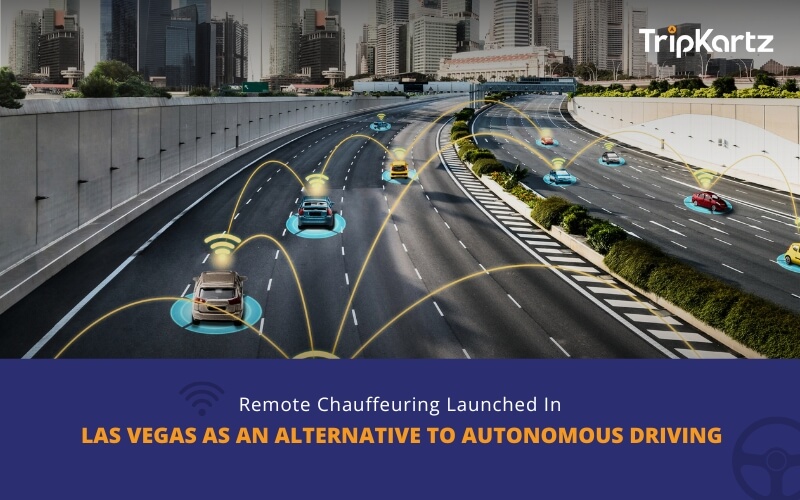
A remote car-driving service from German-based startup Vay uses augmented reality technology to offer a safer alternative to driverless cars.
Remote Chauffeuring Launched in Las Vegas As An Alternative To Autonomous Driving
While autonomous car technology helps reduce traffic congestion and makes travel stress-free, it comes with its own set of problems. For one, self-driving cars are prone to accidents. Maintenance is also a huge concern. Unsurprisingly, around 63% of respondents in a Pew Research survey said they wouldn’t want a ride in a driverless vehicle.
Tele-driving or remote car driving services are a comparatively safer alternative to driverless cars. In these services, a human operator uses a video game-like device to steer the vehicle safely from a physical steering station located miles away.
What Is A Remote Car Driving Service?
Remote chauffeuring is part of the tele-driving model, in which human operators control the vehicle remotely, steering it from a physical location miles away. The car is outfitted with cameras, GPS, and a host of other sensors that can reproduce the car’s actual surroundings, including traffic sounds at a custom-built station that’s equipped with a steering wheel, monitor, and other controls.
A German startup, Vay, has already launched its commercial remote car-driving service in Las Vegas, between the city’s Art District and the University of Nevada. Customers interested in the service can request a ride through an app. The human operators at Vay then remotely drive the car to the customer using a series of cameras, sensors, and augmented reality technology.
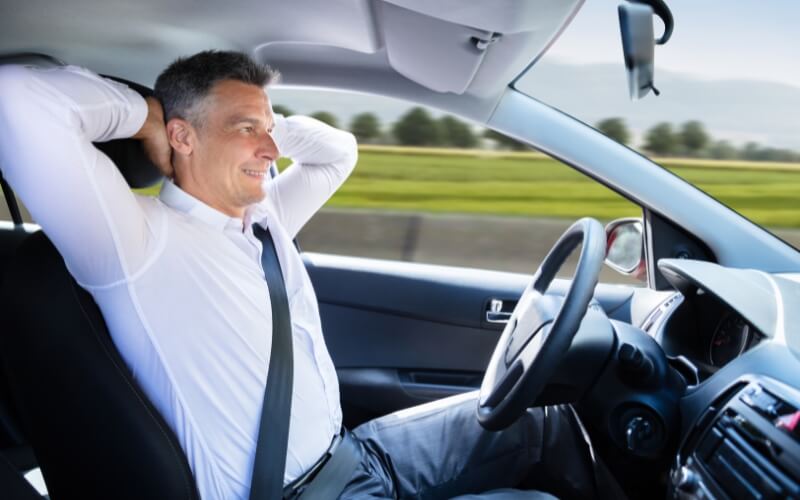
Once the car arrives, the customer takes charge and drives it. When the trip is complete, the remote driver takes control and drives the car back to its original place or to another customer requesting the service. Customers are charged $.30 per minute when driving and $.03 per minute if the vehicle is parked for shopping or running other errands.
The remote driving station looks like an advanced version of an arcade game, complete with steering wheels and other tools. It also has a large screen that reproduces the car’s real-world traffic using a series of cameras and sensors.
A Better Alternative to Autonomous Driving
Vay is pitching teledriving as an alternative to driverless cars, which are increasingly facing safety issues. Teledrivers can also drive you home if you’ve had a drink or two and need a chauffeur. This comes as a massive step in the right direction after an autonomous taxi service in California was forced to cease operations after a driverless car ran over a pedestrian and another drove into wet cement.
What Does This Mean for Mobility Solution Providers Like TripKartz?
Corporate car rental companies such as TripKartz are grappling with challenges like driver shortages and increasing traffic on a daily basis. If every vehicle is equipped with tele-driving, we can have an on-demand valet that can take over the job when a driver is off-duty or caught in traffic.
It could be a long time before the service is introduced in India, but we’d be happy to welcome the concept wholeheartedly. Beyond its use in car rental, we’re excited about its potential to revolutionise how several industries work. For instance, drivers who travel long distances and are away from their families for a long time can use a remote car-driving service to hire a tele-driver while visiting their family.
